
Europe Expansion
Vector Agents Enters Europe. Announcing Our Regional Leadership.

Europe Expansion
Vector Agents Enters Europe. Announcing Our Regional Leadership.


The B2B lead generation company market is noisy because every vendor, whether they are a contact database, outsourced SDR agency, or an AI digital worker, uses the same language to describe structurally different products. That makes vendor comparison expensive: you spend time on discovery calls before realising you were evaluating the wrong category entirely.
This article cuts through that by ranking 11 of the top B2B lead generation companies across all three categories, with a full comparison table so you can shortlist the right type fast.
The vendor category you choose determines what output lands in your pipeline, what it costs per unit of output, and how much it scales without adding headcount. Getting this wrong is more expensive than choosing the wrong vendor within the right category.
The category mismatch problem is real. A data platform will not book meetings; it gives you contacts to work. A managed service will not compress unit cost at scale; it transfers one headcount problem to an external team and bills accordingly. An AI digital worker performs best when the ICP and messaging are already defined; it amplifies what is there, it does not create it from nothing. When SDRs spend the majority of their working hours on non-selling tasks, the vendor category you choose determines how much of that time is recovered and how quickly.
The 11 vendors below are not ranked on a single quality scale. They are ranked within a framework: type first, then channel fit, pricing model, and company size match. A data platform cannot be compared directly to a managed service, and a managed service cannot be compared to an AI digital worker.
Filter by type first. Then use channel, pricing model, and company size to shortlist within the category that fits your pipeline problem.
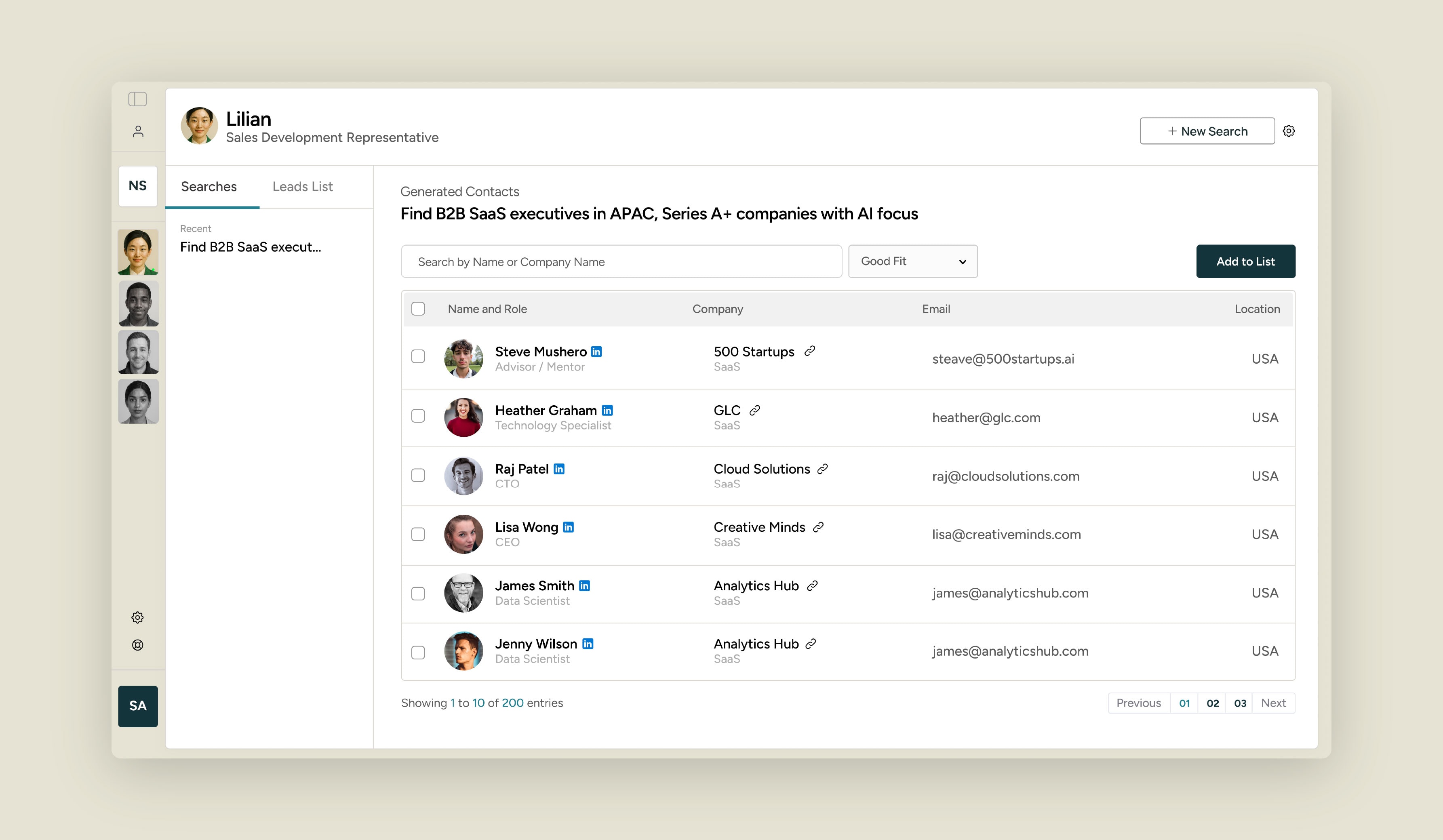
Vector Agents is a product, not a service or platform. Its digital worker Lilian handles the complete outbound SDR workflow autonomously and continuously, removing the execution gap that disconnected outbound tools and manual SDR handoffs between prospecting, sequencing, and meeting booking create, gaps that stretch lead-to-meeting time from days into weeks.
Most AI digital workers require a fully defined ICP and polished messaging before they can perform. Lilian is trained directly on your company data, product positioning, past deals, customer profiles, and sales context, which means she builds her own understanding of your ICP rather than waiting for one to be handed to her. That removes the most common barrier to deploying an AI digital worker: the assumption that all the strategic work is already done.
Key limitation: Lilian's output quality depends on the quality of your company data and the clarity of your sales context. Teams with incomplete CRM records, inconsistent deal history, or undefined positioning will see slower ramp and less precise targeting until that data foundation is in place.
When SDRs run outbound across disconnected tools, they rely on manual handoffs between prospecting, sequencing, and CRM updates that fragment execution and slow pipeline velocity. Sales teams that removed that friction using AI are 83% more likely to see revenue growth than those that did not.
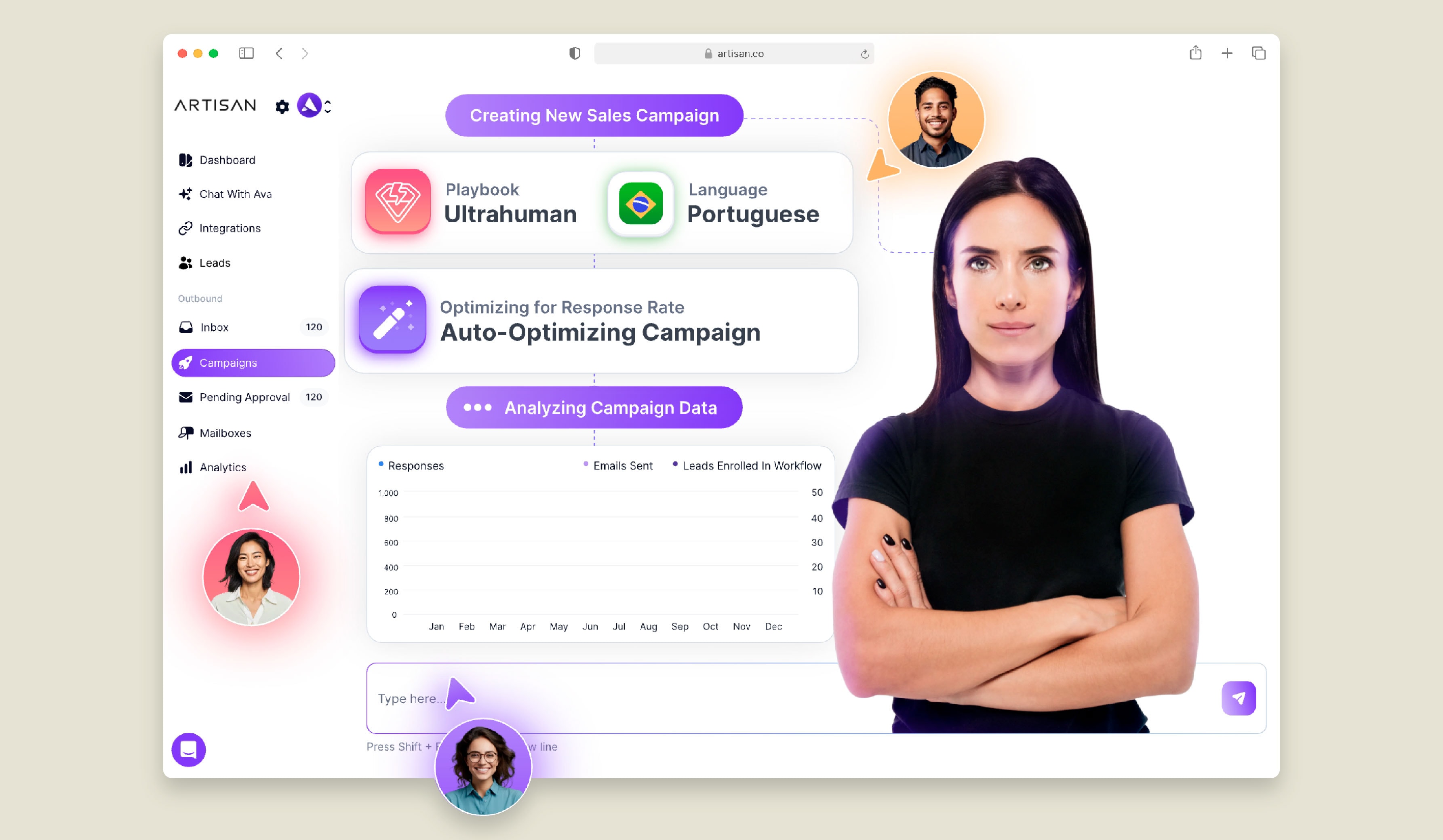
Artisan's AI BDR Ava consolidates lead sourcing, outreach execution, and meeting booking into a single interface, removing the tool-switching overhead that slows SDR teams running Apollo, Outreach, and a CRM in parallel, each handoff between tools adding latency and data loss to the prospecting cycle.
Key limitation: G2 and independent review analysis consistently flag lead quality gaps for niche or vertical ICPs, with multiple reviewers citing AI-generated messages that lack the specificity needed to break through in specialized markets.
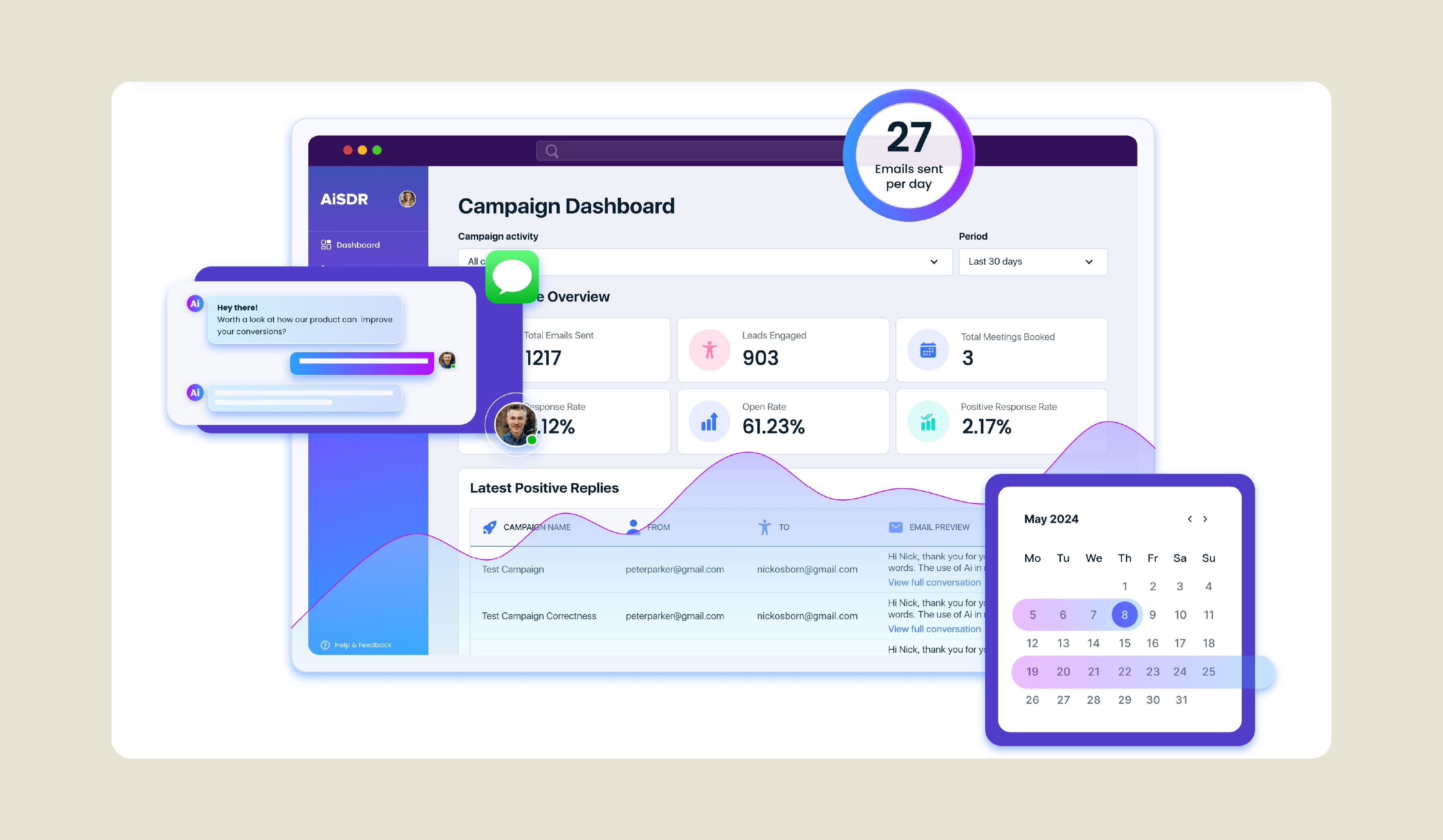
AI SDR deploys fully trained digital sales agents that execute every stage of the prospecting process. Where human SDR teams require ongoing coaching, quota management, and ramp time for new hires, AI SDR agents run a defined playbook continuously — removing the performance variance that makes human SDR output difficult to forecast and budget against.
Key limitation: Fewer independent reviews and published case studies than more established platforms in this category, which makes vendor validation harder before committing budget.
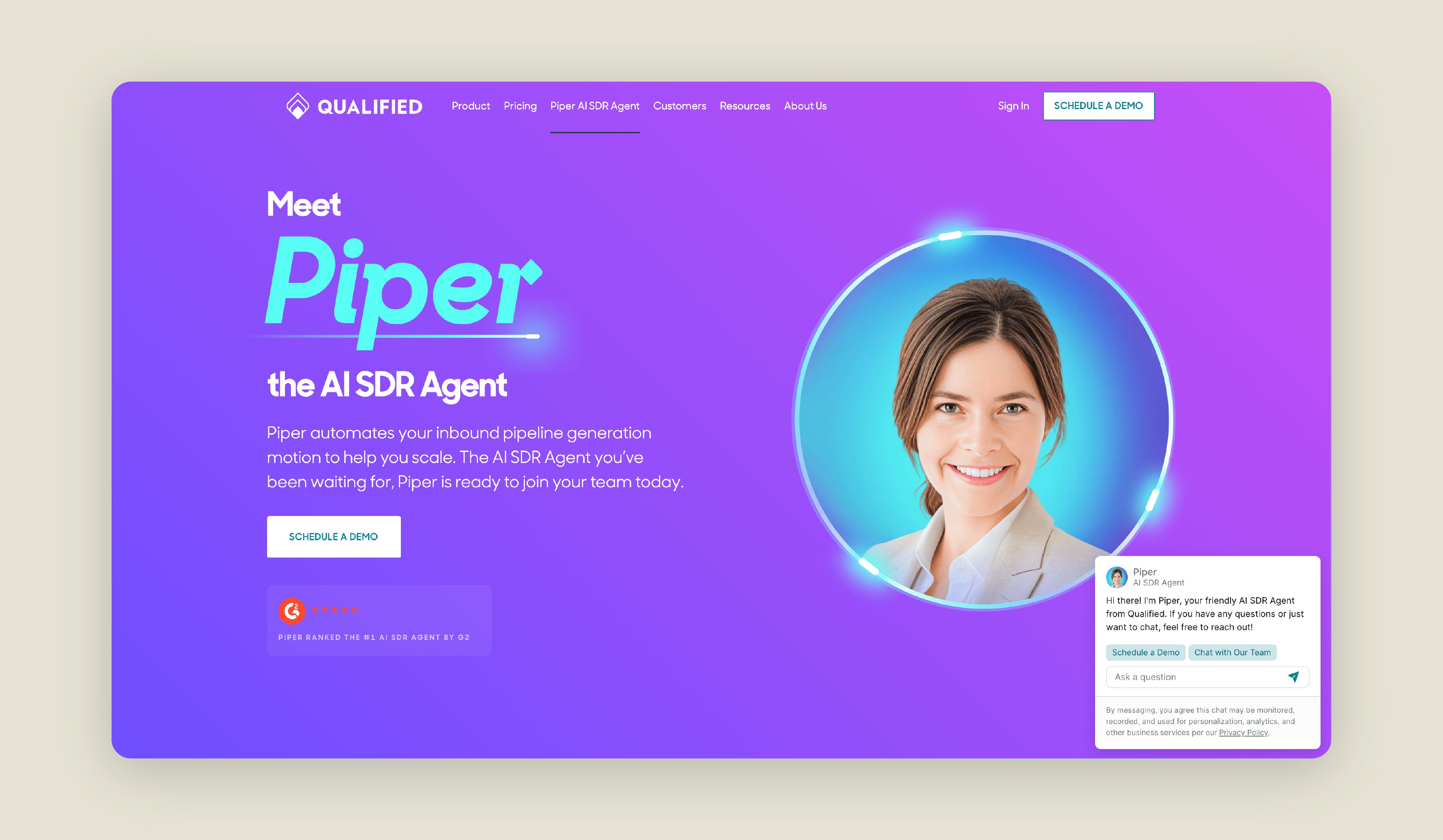
Qualified's AI SDR Piper works exclusively on inbound pipeline. When a company invests in demand generation — paid media, content, events — but lacks the SDR bandwidth to work every inbound lead immediately, those leads decay. Piper eliminates that decay by engaging website visitors the moment they show intent, without waiting for a human rep to become available.
Key limitation: Zero outbound prospecting capability. Piper converts existing website traffic; she does not generate it.
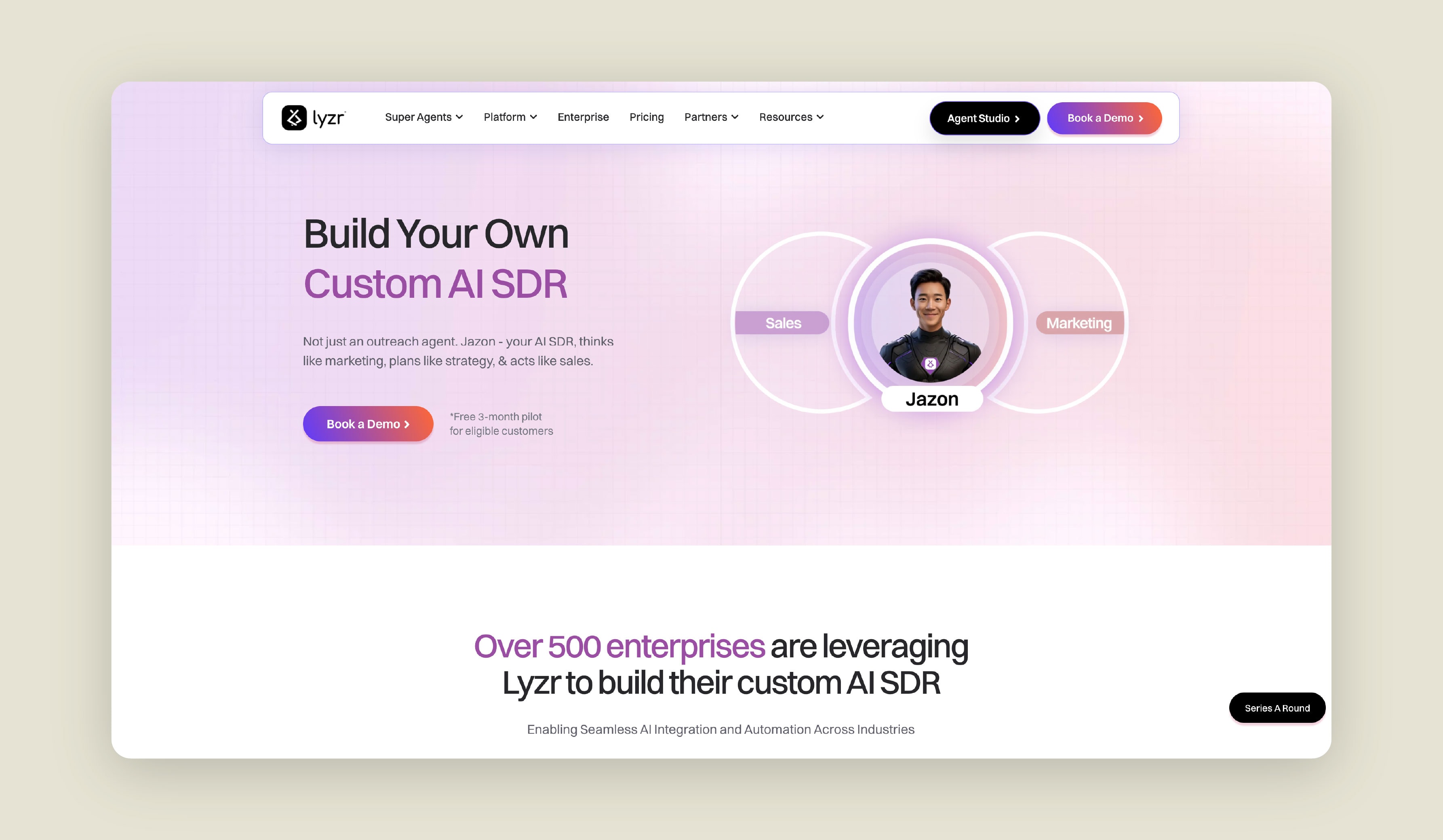
Jazon is an AI SDR built by Lyzr with one feature that separates it from every other vendor in this list: on-premise and private cloud deployment. For companies in financial services, healthcare, insurance, or government where cloud-based AI tools fail data residency requirements, Jazon is the only AI digital worker option that keeps all prospect data, conversation history, and outreach content within the company's own infrastructure.
Key limitation: Initial setup requires meaningful technical investment. This is not a plug-and-play option for non-technical sales teams.
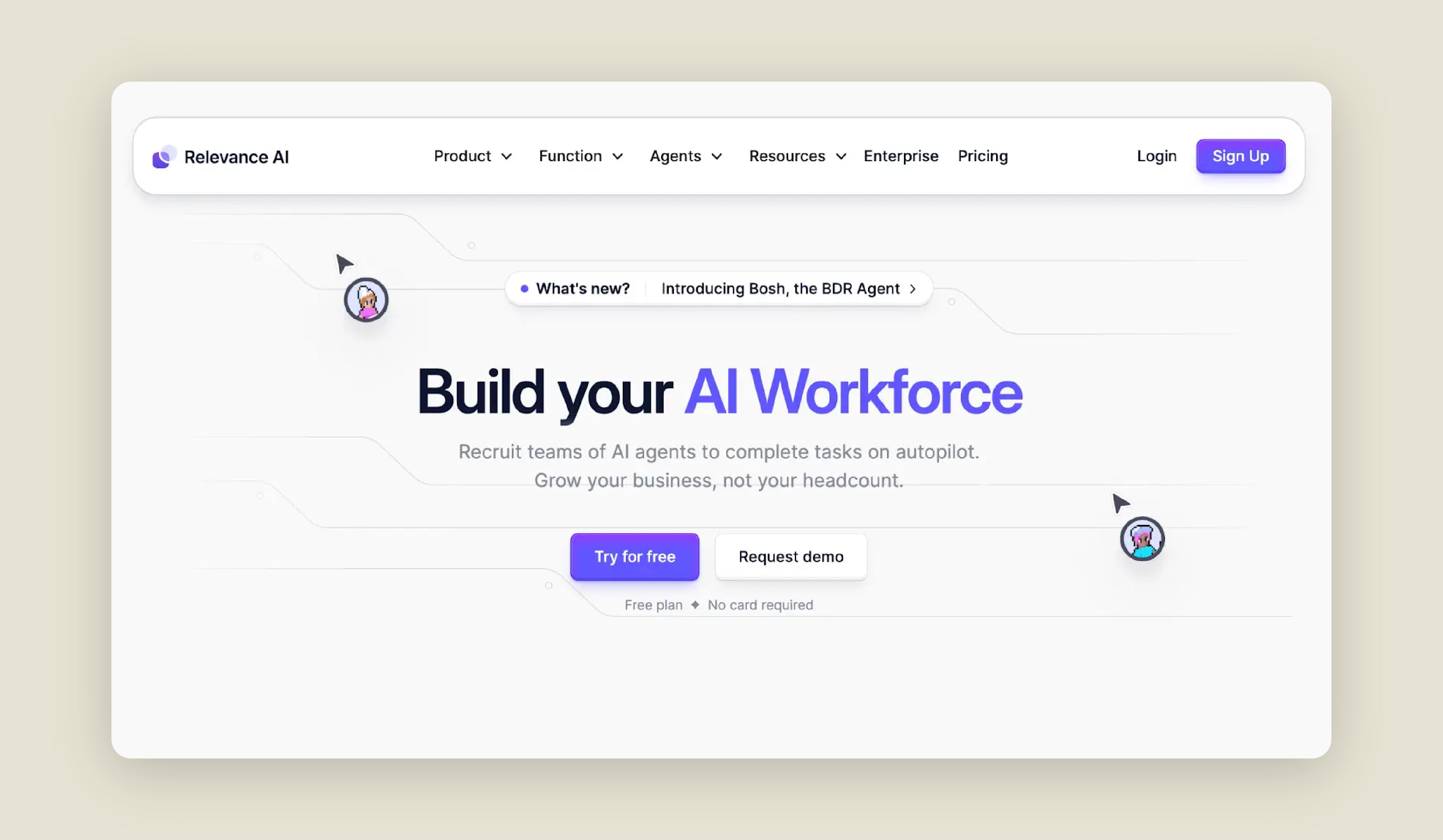
Relevance AI is not a pre-built AI SDR. It is a low-to-no-code platform for teams that need custom AI agent workflows rather than a pre-configured outbound product, .configuring agents for BDR outreach, lead scoring, CRM updates, and reporting, each running its own logic and triggered by defined events.
Key limitation: G2 reviewers consistently flag a steep learning curve and unpredictable credit consumption at scale as the main limitations. Complex multi-agent builds require real technical skill despite the low-code positioning.
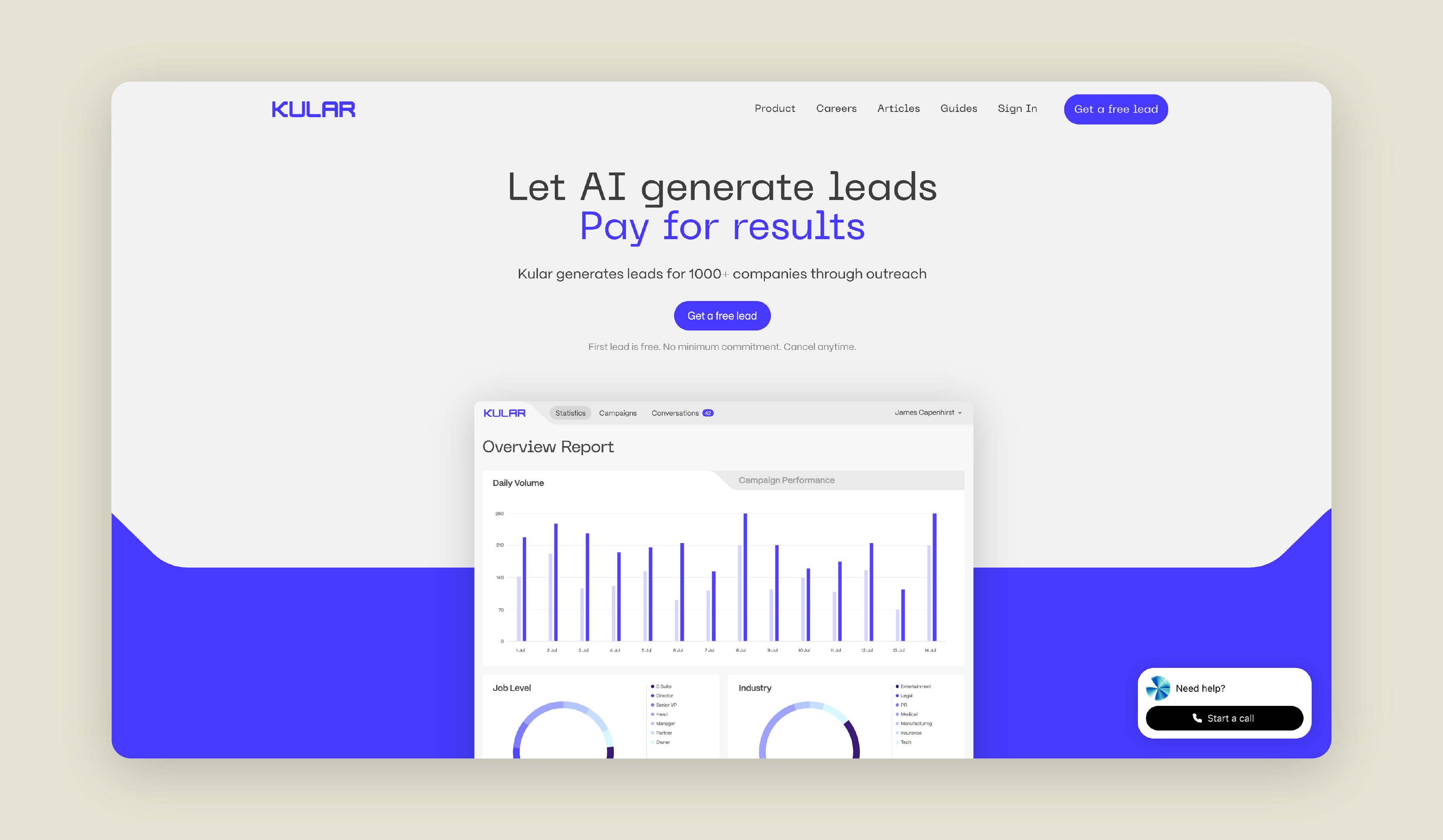
Kular runs AI-powered outbound across email, LinkedIn, and voice from a database of 200M+ contacts. Its pricing model transfers performance risk to the vendor: you pay $250 per qualified lead only when a lead matching your ICP criteria expresses genuine interest. Because there is no retainer or platform fee, the cost is zero until a result is delivered.
Key limitation: Limited ICP customization, no native CRM integration, and variable lead quality for specialized or niche markets.
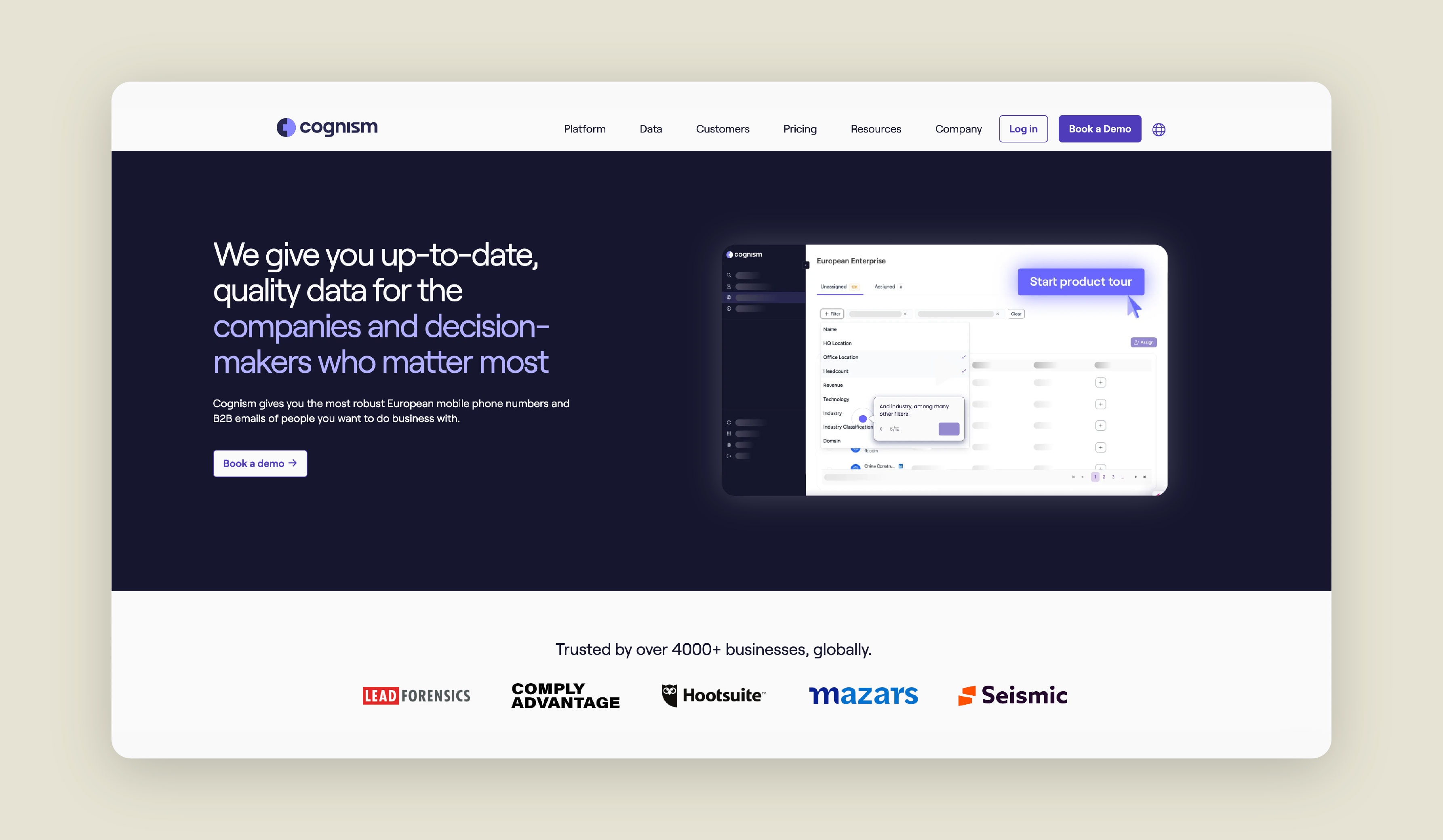
Cognism is a B2B sales lead generation company of a fundamentally different kind: it provides the contact data that makes outbound possible, not the execution. Teams buying Cognism are solving a data problem; inaccurate contact records, low mobile number coverage, or compliance risk in European markets, not an execution problem.
Key limitation: No built-in outreach tooling. Teams using Cognism still need a separate B2B lead generation service or sales engagement platform to execute campaigns. Cognism is an input to your outbound stack, not a replacement for it.
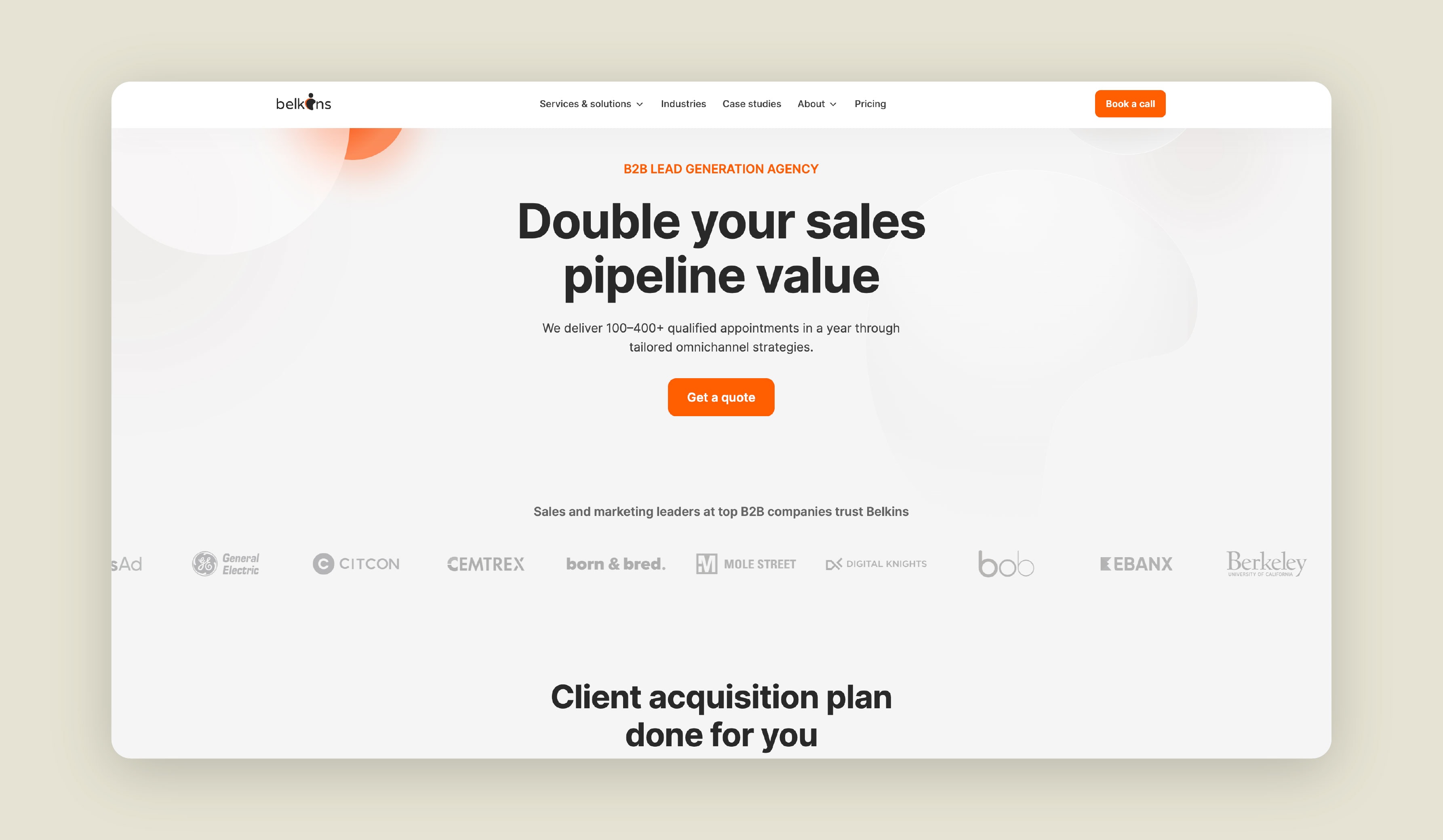
Belkins is a managed B2B lead generation service that assigns dedicated human SDR teams to run outbound on behalf of the client. Founded in 2015, the agency has run campaigns for 1,000+ companies across 50+ industries, and Belkins self-reports $2B+ in client revenue generated since 2017.
Key limitation: Manual execution model means cost scales directly with output. As pipeline targets grow, so does the retainer. Quality can vary based on which team pod is assigned to the account.
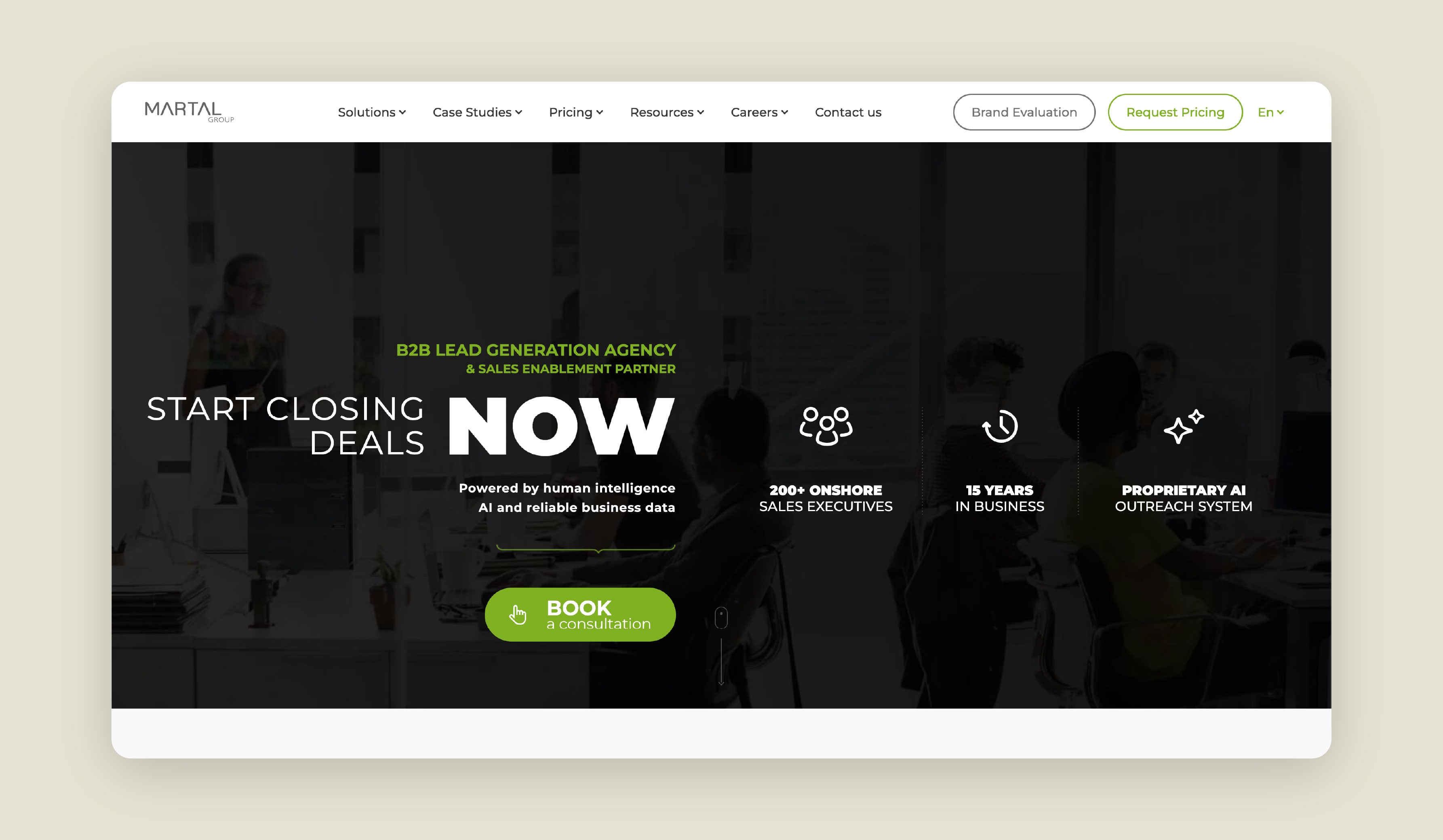
Martal Group provides fully managed outbound for B2B sales lead generation companies in tech, SaaS, cybersecurity, fintech, and manufacturing. The agency deploys dedicated sales executives who manage the complete funnel from list building through to meeting booking, supported by a proprietary 220M+ contact database with intent and technographic data.
Key limitation: Clutch client reviews cite variable data quality and delayed campaign testing as recurring limitations. The full-cycle model, where one sales executive manages the entire funnel, limits specialist depth at each stage.
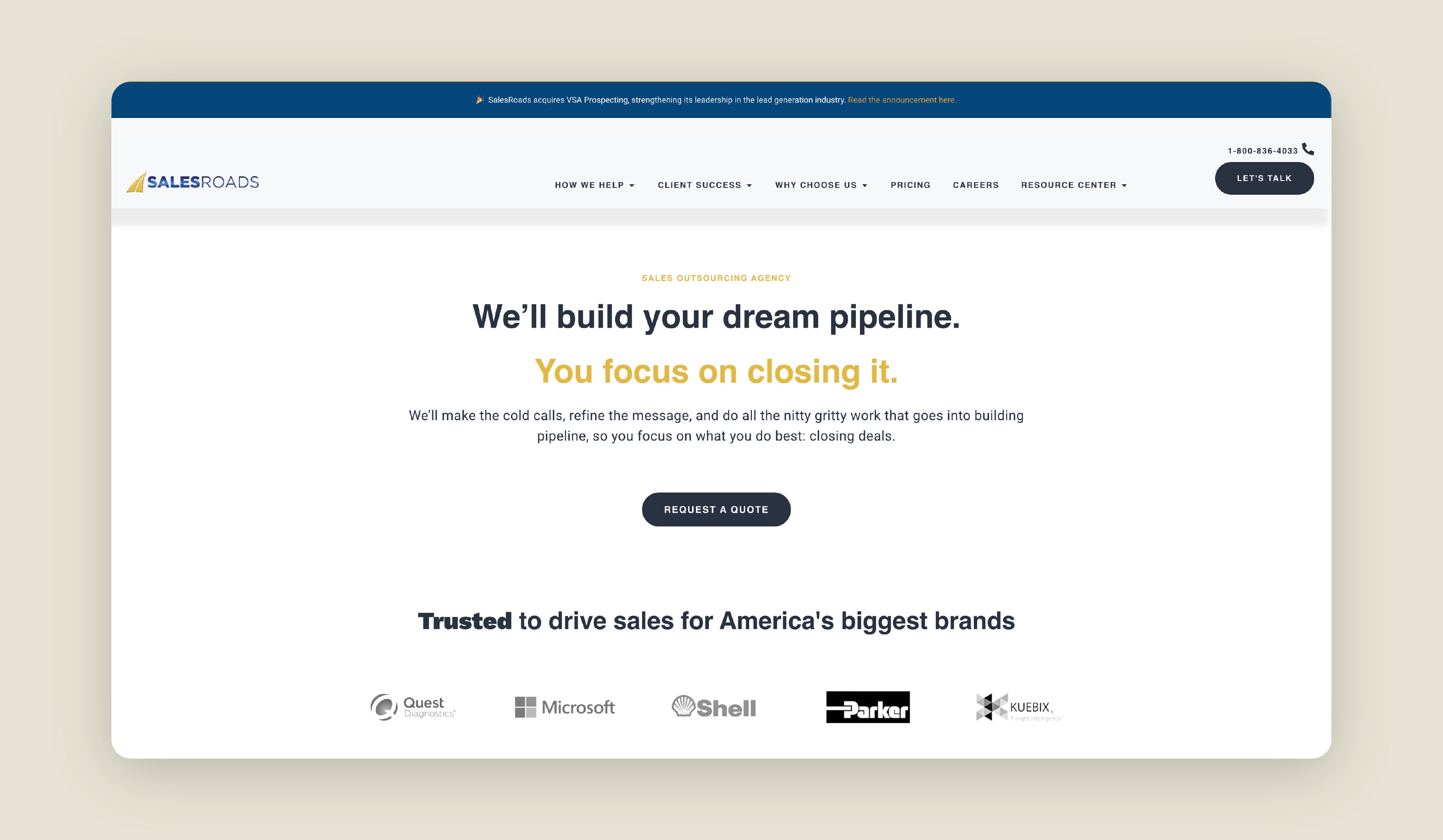
SalesRoads is a US-based B2B lead generation company specializing in phone-first appointment setting. Founded in 2006, the agency employs native-English SDRs who average more than 14 years in telesales. Campaigns use customized talk tracks rather than scripts, and every engagement includes full call recordings and performance reporting.
Key limitation: Phone emphasis limits multi-channel reach. For companies where email and LinkedIn are the primary prospecting channels, SalesRoads is not the right fit.
Choosing between vendors is not a feature comparison. It is a decision about what is actually broken in your current pipeline motion. Work through these five questions in order before evaluating any specific vendor.
Contact data, booked meetings, and qualified pipeline are three different deliverables with different downstream implications for your AE team. If your SDRs are losing hours to bad contact data, start with a data platform. If you need booked meetings handed to your sales team ready for a conversation, choose between an AI digital worker and a managed service based on cost model and speed. If you need qualified pipeline with relationship-building at the centre of the deal motion from the first touch, a managed service fits better.
AI digital workers amplify what is already there. If your ICP is still being validated, a managed service that iterates messaging with human oversight is the better starting point. Once ICP and messaging are locked, switching to an AI digital worker compresses costs significantly because you remove the per-rep variable cost from the equation.
AI digital workers handle prospecting, outreach, and qualification — the part of the sales cycle that consumes the most SDR time and produces the least revenue per hour. Your sales team takes over at the call, which is where relationship-building and deal-making actually happen. For high-complexity enterprise sales where a human relationship is needed earlier in the cycle, before a meeting is even booked, a managed service with human SDRs is the better fit.
Email-first outbound suits most B2B ICPs and is where AI digital workers perform best. Phone-first outbound suits regulated industries, manufacturing, and logistics where voice-based relationship-building matters earlier in the cycle. Inbound website conversion requires a dedicated inbound AI SDR and existing traffic volume to generate ROI. LinkedIn-heavy outreach is supported natively by most AI digital worker products.
Retainer-based managed services carry fixed monthly commitments regardless of output. AI digital worker subscriptions scale with usage. Pay-per-lead models transfer performance risk to the vendor but limit ICP customization. For a 50–500 employee company with a defined ICP and a pipeline gap, AI lead generation run autonomously removes the per-rep variable cost that makes managed service retainers expensive to scale, as pipeline targets rise, the cost per booked meeting stays flat rather than rising with each new target.
For most sales management teams at 50–500 employee companies running a sales-led motion, the answer to all five questions points toward the same split: an AI digital worker that handles outbound end-to-end up to the booked meeting, and your sales team taking it from there. Lilian fills the prospecting and qualification gap so your reps spend their time on calls, not on building lists.
Hiring an SDR to close a pipeline gap follows a fixed sequence: recruiting takes weeks, onboarding takes more, and ramp time before the first meeting is booked can stretch to 3–6 months. The cost arrives in the first month; the pipeline arrives months later. For a team running against a quarterly number, that sequence is the problem.
Lilian, Vector Agents' digital worker for B2B lead generation, is operational in days. She runs outbound continuously across email and LinkedIn, enriches your CRM with account intelligence on every prospect she contacts, handles replies, and books meetings directly onto your AEs' calendars. The pipeline she generates does not require headcount to arrive first, and her output does not plateau when a rep hits capacity.
If your pipeline gap is an outbound execution problem, book a demo to see exactly how Lilian closes it without adding SDR headcount to your budget.
The best B2B lead generation company depends on what output you need. For autonomous outbound that books meetings without SDR headcount, Vector Agents (Lilian) is the strongest option for 50–500 employee companies. For verified contact data in European markets, Cognism leads on data quality and compliance. For outsourced human SDR teams, Belkins and SalesRoads are the most established options.
A B2B lead generation service assigns human SDRs to run outbound on your behalf; you pay a retainer for their time and output. A B2B lead generation platform gives you tools or AI agents to run outbound yourself. AI digital worker products like Vector Agents sit in a third category: they replace the SDR function with autonomous execution rather than assisting it.
Pricing varies by category. AI digital worker subscriptions range from free trials to $2,000+/month at scale. B2B data platforms like Cognism start at roughly $15,000/year and reach $100,000+ for large teams. Managed outbound agencies range from $5,000 per project to $4,000–$10,000/month on retainer. Pay-per-lead models like Kular charge $250 per qualified lead with no minimum commitment.
AI digital workers like Lilian handle the complete SDR workflow autonomously: prospecting, research, personalized outreach, reply handling, and meeting booking. They are operational in days rather than months and run continuously without ramp time or coaching overhead. They perform best when ICP and messaging are already defined. For high-complexity enterprise sales where relationship-building over months drives deal velocity, human SDRs still carry an advantage.
Evaluate vendors in this order: output type first (contact data, booked meetings, or qualified pipeline), then execution model (AI autonomous vs. human SDR), then channel fit (email, phone, LinkedIn, or inbound), then CRM integration depth, then pricing model. A vendor that excels within the wrong category for your pipeline problem will underperform regardless of its individual quality.
AI digital worker products (Vector Agents, Artisan, Kular) are typically operational within days and begin executing outreach immediately. Managed services (Belkins, Martal, SalesRoads) require 2–4 weeks of onboarding before campaigns run. Data platforms (Cognism) require a separate outreach tool to be configured before any contacts are worked. Of the three categories, AI digital workers have the shortest path from sign-up to first booked meeting.

.svg)


.svg)
Vector AI All rights reserved. © 2025


.jpeg)