
Europe Expansion
Vector Agents Enters Europe. Announcing Our Regional Leadership.

Europe Expansion
Vector Agents Enters Europe. Announcing Our Regional Leadership.


Cold email is the channel B2B decision makers prefer above LinkedIn and cold calls. The problem is not the channel. It is that most outreach arriving in decision makers' inboxes reads like it was written for no one in particular, pulled from a template library, and sent without adjustment.
The result is predictable: low reply rates, wasted SDR time, and pipeline targets that keep slipping. The issue is not sending more emails but sending messages that are relevant enough to earn a response.
This article covers the specific B2B lead generation email templates that produce meetings rather than silence, how to sequence them, and where the model reaches its limit as outbound volume increases.
In a survey of 217 decision-makers combined with analysis of 11 million cold emails, 71% named lack of relevancy as the primary reason they do not respond, followed by impersonality (43%) and lack of trust (36%).
Three structural failure modes produce it:
None of these are template problems in isolation. They are execution problems that templates get blamed for.
Understanding what failure looks like at the campaign level changes how you approach template selection.
A framework does not produce replies on its own. Four variables at the campaign level determine whether any template generates pipeline.
These four variables apply across every framework below. Getting them right is what determines whether the framework converts.
The frameworks used in high-performing B2B lead generation email templates each follow a persuasion sequence. The difference is where they start and what they optimize for.
Here's the section with the five framework headers set as H3 (one level below the H2 "cold email frameworks" section header).
AIDA moves a prospect from awareness to a specific action across four steps: a hook that earns attention, a connection to the reader's situation that builds interest, a concrete benefit that creates desire, and a single low-friction ask.
It's the broadest framework and works well as a first-touch email when the sender doesn't have a specific trigger event to work from.
Where it breaks: AIDA's performance depends entirely on the opening line. A first sentence that could apply to any company signals to the reader that the email wasn't written for them, and they disengage before the value proposition is reached.
PAS opens with the prospect's specific operational problem, sharpens it by articulating what it costs to leave that problem unresolved, then positions the sender's offering as the fix.
When the problem is named with specificity, the reader recognises themselves in the second sentence and continues.
Where it breaks: A vague problem statement, one that could apply to any company in any industry, collapses the framework at the first line.
BAB describes the reader's current state, paints a concrete picture of the improved state, then presents the offering as the mechanism that moves between them.
It works best when there's a tangible outcome the reader already wants and can visualise.
Where it breaks: Overstating the "before" state triggers scepticism, so the current-state description must be accurate and recognisable rather than a worst-case scenario built to create contrast.
A trigger event email opens with a specific, verifiable event at the prospect's company: a funding round, a new market entry, a leadership change, a job posting signalling headcount growth, or a product launch.
It works because it arrives at a moment of change, when the prospect is already reconsidering how they operate.
Where it breaks: The connection between the trigger and the challenge must be logical. "You expanded into a new region, so you will need more outbound pipeline" is a credible connection. "You raised funding, so you should buy our product" is not.
This format reduces the entire email to three statements: who the sender is, what they do for a specific type of company, and one yes/no question.
It suits senior buyers who respond poorly to long pitches and works well as the final touch in a sequence where earlier emails have already made the case.
Where it breaks: The ICP description in the second sentence must be precise enough that the reader can identify whether they match. "We work with sales leaders at B2B SaaS companies scaling outbound with a team of two to five SDRs" is specific. "We help businesses grow" disqualifies itself before the question.
These five templates map directly to the frameworks above. Each includes bracketed variables indicating what requires customisation, followed by two worked examples from different industries.
Subject: [specific trigger at their company]
Hi [first name],
Saw that [company] just [trigger event]. When that happens, [relevant priority] usually becomes urgent fast.
We help [specific ICP description] [concrete outcome].
Worth a 20-minute conversation?
[Name]
Adaptation note: The trigger must be specific and verifiable. "I saw your recent growth" is not a trigger. "I saw you posted three roles in the last two weeks" is. The ICP description should match the recipient's actual company type, not a category so broad it includes everyone.
Subject: Redwood Logistics + new fleet expansion
Hi Marcus,
Saw that Redwood Logistics just added twelve vehicles to the fleet. When that happens, coverage gaps usually show up fast, especially across new routes and drivers.
We help mid-size logistics companies close those gaps before a claim finds them first.
Worth a 20-minute conversation?
Priya Nair Harbor & Stone Insurance
Subject: Halden Analytics + new office
Hi Fiona,
Saw that Halden Analytics just opened a Austin office. When that happens, local hiring usually becomes the bottleneck before the team is even settled in.
We help data and analytics firms fill technical roles in new markets without building a local recruiting function from scratch.
Worth a 20-minute conversation?
Devon Marsh Northgate Talent Partners
Subject: [role-specific pain point as a question]
Hi [first name],
Most [role] I speak with are dealing with [specific operational problem]. The issue is not effort. [Root cause] means the result does not reflect the specific situation of the person dealing with it.
[Company] helps [specific ICP] [outcome] without [the trade-off they want to avoid].
Happy to show you how. Does [day] work?
[Name]
Adaptation note: The problem in the second sentence must be something the reader recognises without effort. If it requires two sentences to explain, the problem statement is too complex for a cold email opening. Sharpen it to one specific operational reality.
Subject: Still scheduling maintenance reactively?
Hi Priya,
Most plant managers I speak with are running maintenance schedules built around fixed intervals, not actual equipment condition. The issue is not the team. Fixed-interval scheduling misses early failure signals, which means downtime still happens on the equipment that matters most.
Ironclad Reliability Group helps mid-size manufacturers catch failures before they cause downtime, without adding headcount to the maintenance team.
Happy to show you how. Does Thursday work?
Sam Whitfield
Subject: Still fielding complaints about missed spots?
Hi Daniel,
Most facilities managers I speak with are stuck between two bad options: a cleaning contract that is too rigid to flex with occupancy, or one loose enough that quality slips. The issue is not the vendor's intent. Fixed-scope contracts do not adjust to how a building actually gets used week to week.
Brightline Facility Services helps commercial property teams keep consistent standards across occupancy swings, without renegotiating the contract every quarter.
Happy to show you how. Does Tuesday work?
Renata Ochoa

Subject: [specific outcome] for [company type]
Hi [first name],
Right now, most [process] at companies like [company] take [time period] and require significant manual coordination.
Imagine that same process running with a fraction of the overhead: faster, more consistent, and freeing your team for higher-value work.
That is what we build for [specific ICP]. Would it make sense to connect?
[Name]
Adaptation note: The "before" state must reflect the reader's actual current situation, not a dramatised version of it. Describing a problem worse than what they experience creates scepticism rather than recognition.
Subject: Faster month-end close for growing retailers
Hi Anita,
Right now, most month-end close processes at companies like yours take seven to ten days and require manual reconciliation across multiple systems.
Imagine that same close running in two to three days: faster, more consistent, and freeing your finance team for forecasting instead of chasing numbers.
That is what we build for multi-location retail brands. Would it make sense to connect?
Walter Kim Ledgerline Advisory
Subject: Faster lease abstraction for growing portfolios
Hi Tobias,
Right now, most lease abstraction at portfolios your size takes two to three weeks per batch and requires a team combing through PDFs line by line.
Imagine that same process running in days instead of weeks: faster, more consistent, and freeing your asset managers to focus on renewals and negotiations.
That is what we build for commercial landlords managing twenty or more properties. Would it make sense to connect?
Elena Rourke Fieldstone Portfolio Solutions
Subject: [company name] + [relevant capability]
Hi [first name],
Noticed [company] recently [specific trigger]. Companies at that stage often find that [specific operational challenge that trigger creates].
We help teams in exactly that position to [concrete outcome]. Is 15 minutes this week worth it?
[Name]
Adaptation note: The connection between the trigger and the challenge must be causal, not assumed. The reader should recognise the challenge you name as a real consequence of the event you referenced, not a generic problem attached to their news.
Subject: Acme Corp + upcoming audit prep
Hi James,
Noticed Acme Corp recently expanded into two new states. Companies at that stage often find that multi-state compliance requirements catch their finance team off guard during the next audit cycle.
We help finance teams in exactly that position get audit-ready before the deadline hits. Is 15 minutes this week worth it?
Marcus Delgado Northbridge Tax & Compliance
Subject: Nordlight Studios + team growth
Hi Renee,
Noticed Nordlight Studios recently crossed fifty employees. Companies at that stage often find their existing benefits plan was built for a much smaller team and starts creating gaps in coverage and cost.
We help growing companies in exactly that position rebuild their benefits plan around where the team is headed, not where it started. Is 15 minutes this week worth it?
Julia Bannerman Cornerstone Benefits Group
Subject: [company name]
Hi [first name],
I work with [specific ICP] on [specific outcome].
Is that relevant to what you are working on right now?
[Name]
Adaptation note: This format lives or dies on the ICP description in the first sentence. "B2B companies" is not an ICP. Anything broader than a precise description of role, company type, and constraint, and the closing question will not land.
Subject: Halvorsen Freight
Hi Carl,
I work with freight brokers running five to fifteen trucks on securing more consistent shipper contracts without expanding the sales team.
Is that relevant to what you are working on right now?
Tomas Reyes Copperline Freight Partners
Subject: Meridian Health Group
Hi Sophia,
I work with regional hospital systems on filling per diem nursing shifts faster during seasonal surges.
Is that relevant to what you are working on right now?
Grace Okafor Meridian Staffing Solutions

Sending one email and waiting is rarely enough. Adding more emails without a clear sequencing logic compounds the problem rather than solving it.
The first follow-up is the highest-leverage action in any B2B cold email sequence. Reply rates in top-performing campaigns increased by up to 49% after the first follow-up. Each additional email beyond that extends the sequence past the point of diminishing returns. Sequences extended past three touches typically generate unsubscribe and spam rates that damage sender reputation across the full campaign, reducing the conversion rate of every future send to that list.
The optimal structure for most B2B outbound is a 3-touch sequence:
"Just following up" emails, where the only content is a request to acknowledge the previous email, add no new information and read as filler.
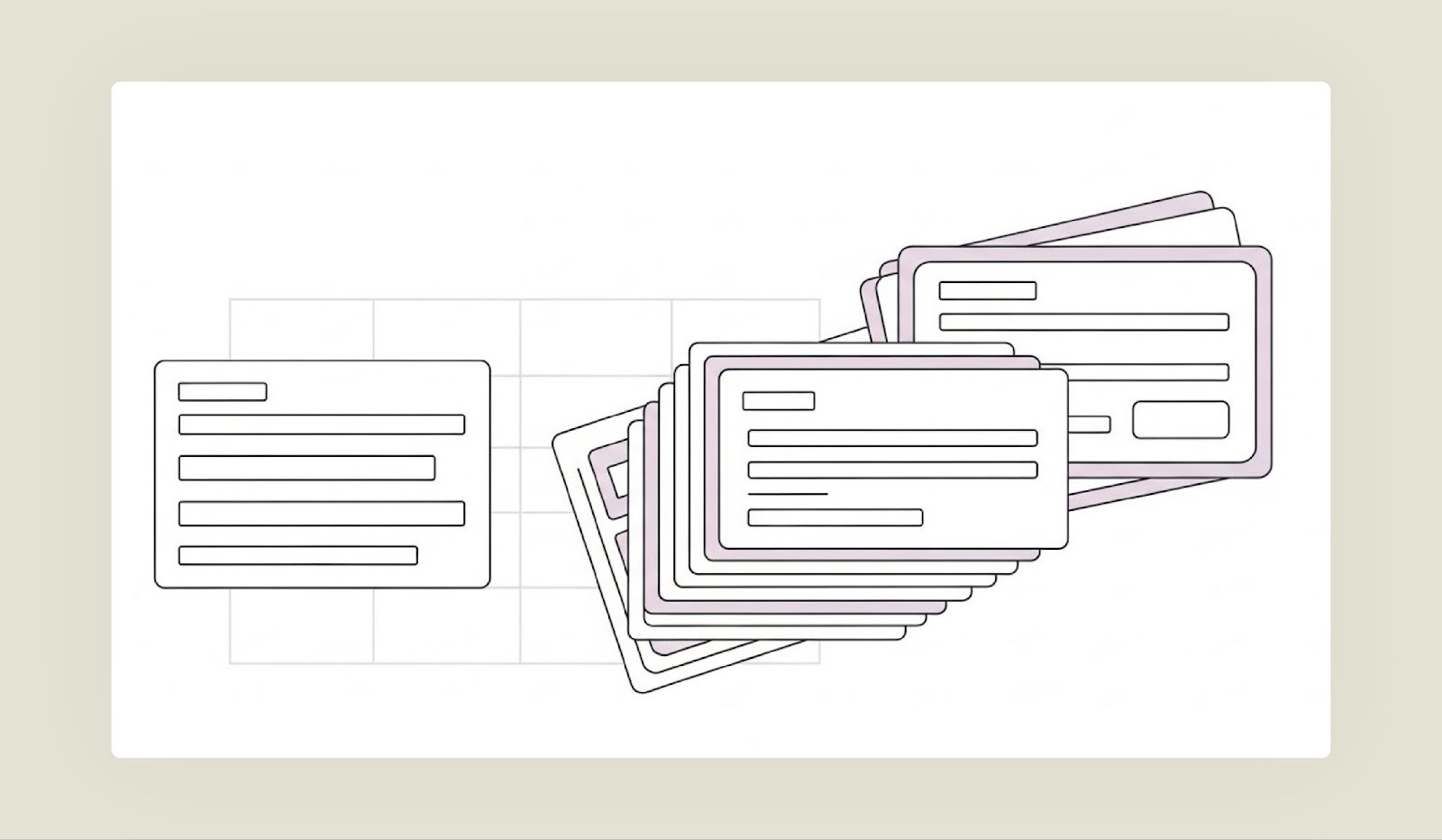
Templates are a copy solution. At a certain outbound volume, the bottleneck is not the copy. Average B2B cold email reply rates fell from 6.8% in 2023 to 5.8% in 2024 across 16.5 million emails, a 15% year-over-year decline.
The cause is a combination of rising outreach volume industrywide, stricter spam filtering from major providers, and the proliferation of sequencing tools that have made it easier to send at scale without improving targeting or personalisation quality.
The floor is falling because the volume of undifferentiated outreach is increasing while the quality of targeting is not keeping pace.
Responding to that pressure by sending more emails or hiring another SDR does not resolve the underlying issue.
Personalised, targeted outreach at scale requires more research, more segmentation, and more sequencing discipline than a human SDR team can execute at volume without quality degrading.
An SDR managing a large contact list while personalising first lines, monitoring replies, and handling follow-up timing across multiple campaigns will default toward volume because it is measurable, even as per-contact quality falls.
Building and maintaining a quality B2B email list is itself a full-time task that most SDR teams underinvest in under volume pressure.
This is where template strategy becomes a capacity question. The copy can be right. The framework can match the prospect. The sequence can be correctly structured. If the system running it cannot maintain that quality at the volume required to hit pipeline targets, the templates are not the constraint.
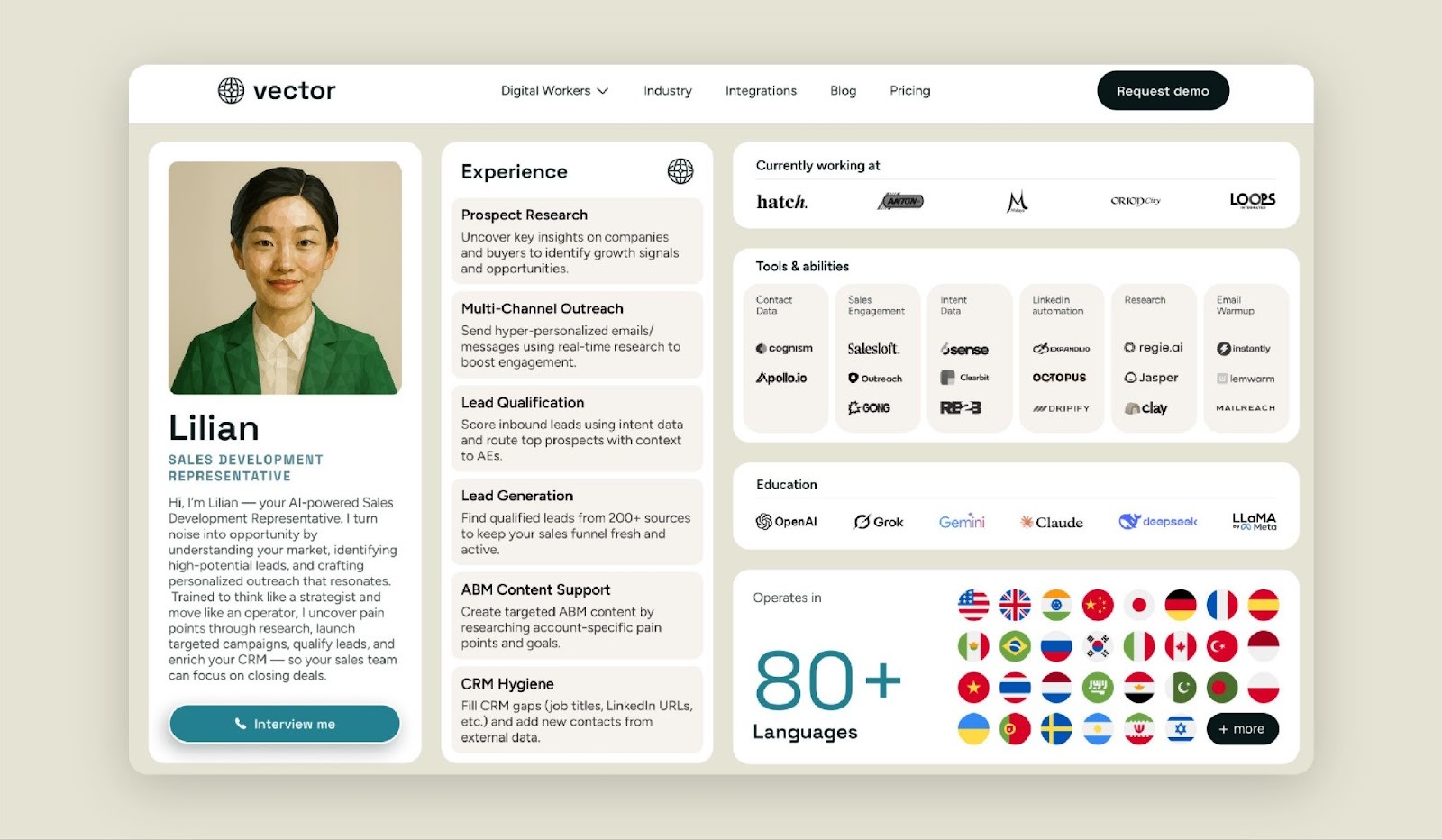
Lilian is Vector Agents' AI SDR. She runs the full B2B outbound function: identifying and qualifying prospects against a defined ICP, personalising outreach based on prospect context and signals, managing multi-touch sequences, and booking meetings directly into the sales team's calendar.
What this removes from the SDR team's plate is the work that degrades under volume pressure: manual prospect research, first-line personalisation across a large contact list, follow-up timing, and sequence management across multiple campaigns running simultaneously. What it produces is pipeline generated at the precision of a targeted, well-researched campaign without the headcount required to sustain that quality as volume increases.
Sales teams running Lilian do not replace their template strategy. They run it at the volume where manual execution would have forced a choice between personalisation quality and throughput. The outbound function continues. The SDR capacity constraint is removed.
Every B2B lead generation email template covered above works when it is applied to the right segment, with substantive personalisation and a correctly structured sequence. The frameworks work because they encode a logical persuasion sequence that matches how B2B buyers evaluate new conversations: on relevance first, credibility second, and ease of response third.
The limit every outbound function eventually reaches is not a copy problem. It is a throughput problem. Maintaining the targeting precision, personalisation depth, and sequence discipline required to consistently generate meetings from cold email frameworks takes more than a library of templates. It requires a system that can execute those functions at the volume your pipeline target demands.
If your outbound volume is growing faster than your team's capacity to personalise and manage it, book a demo to see how Lilian runs the full SDR function at the scale your pipeline target requires.
A B2B lead generation email template is a structured outbound message designed to open a sales conversation with a decision-maker. It combines a repeatable persuasion framework, such as AIDA or PAS, with personalised variables including trigger events, role-specific pain points, and company-level context. Templates are a starting point. They require adaptation to the specific recipient to perform.
Two to three emails is the effective range for most B2B cold email sequences. Each additional touch beyond the third increases spam complaint risk and reduces deliverability across the full campaign, which lowers the conversion rate of every future send to that list. The first follow-up is the highest-leverage action; make it count by introducing a new angle rather than repeating the original pitch.
Effective subject lines for B2B email outreach at scale are short, specific, and non-promotional. They reference a trigger event, ask a direct question, or name the recipient's company in a way that signals relevance. Subject lines that generate opens through curiosity but do not match the email body's content damage reply rates because the reader feels misled and disengages before the value proposition is reached.
A template provides the structural framework: the persuasion sequence and copy scaffold. Personalisation is the layer that adapts that framework to a specific recipient using a verifiable trigger event, a role-specific challenge, or a company-level detail. High-performing cold email frameworks use templates as the skeleton and substantive personalisation as the content that makes each email feel like individual research.
When the volume required to hit pipeline targets exceeds what an SDR team can personalise, sequence, and follow up on without quality degrading. The signal is rising outreach volume accompanied by declining reply rates, which indicates per-contact quality is falling even as the number of contacts increases. At that point, the constraint is throughput rather than the framework being used.

.svg)


.svg)
Vector AI All rights reserved. © 2025


.jpeg)