
Europe Expansion
Vector Agents Enters Europe. Announcing Our Regional Leadership.

Europe Expansion
Vector Agents Enters Europe. Announcing Our Regional Leadership.



AI tools for lead generation fall into distinct categories, and matching the right one to a sales team's actual constraint is what turns a bigger budget into more pipeline. Most lists that rank these tools against each other treat them as interchangeable. They aren't. Some tools help a rep find and score leads faster. Others run outreach on a rep's behalf. A few remove the manual work behind lead generation entirely.
Picking the wrong category wastes budget, adds another login to the stack, and still leaves reps doing the same manual work they were doing before. This list groups the market by what each type of tool actually does to a sales team's week, starting with the category that changes the most.
Adding a data provider is usually the first AI purchase a sales team makes, since a thin or outdated contact list is the most visible limitation in an outbound motion. This category answers a narrow question: who exists in the market that matches an ideal customer profile. It does not decide who to contact first or write the message.
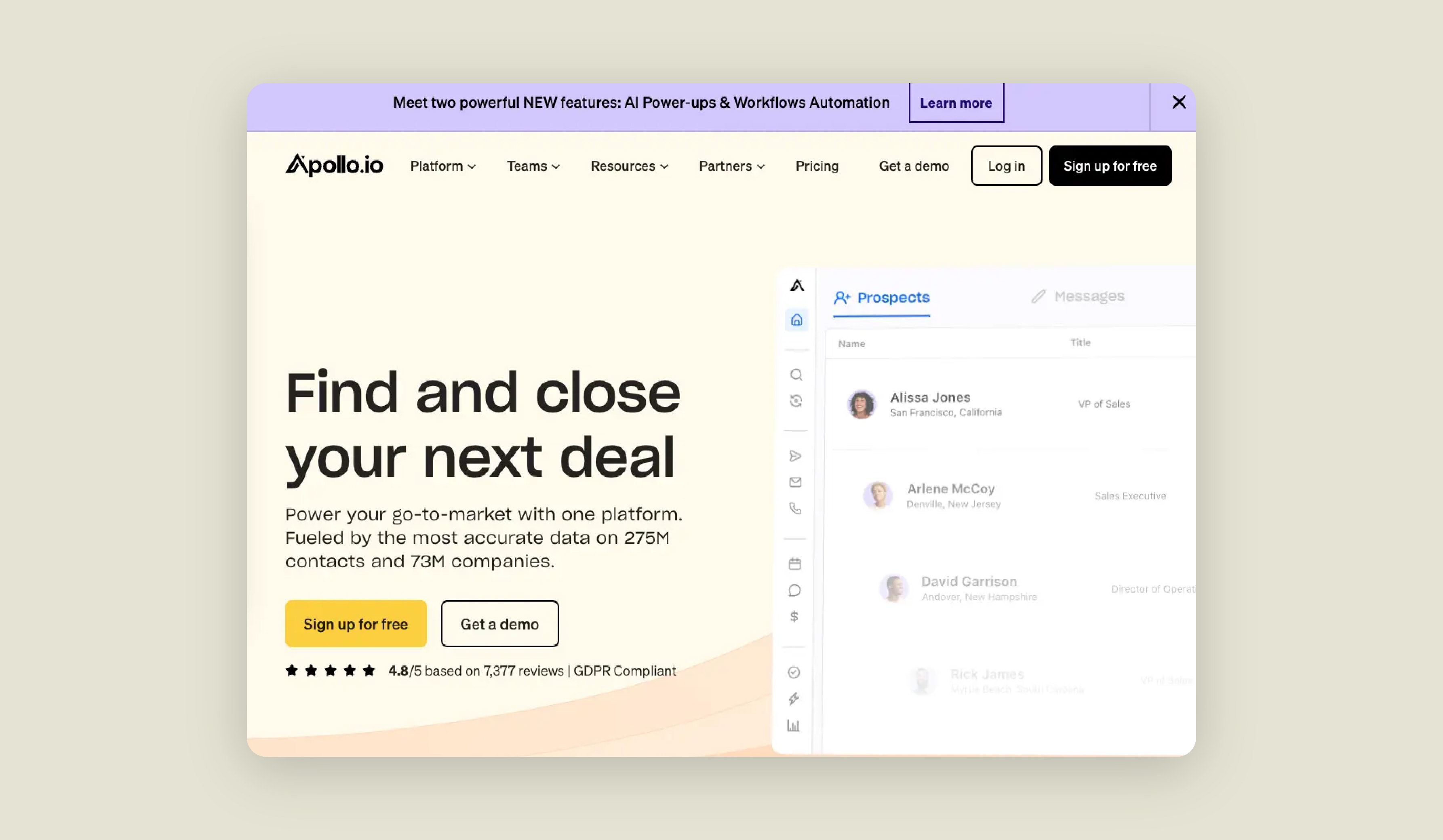
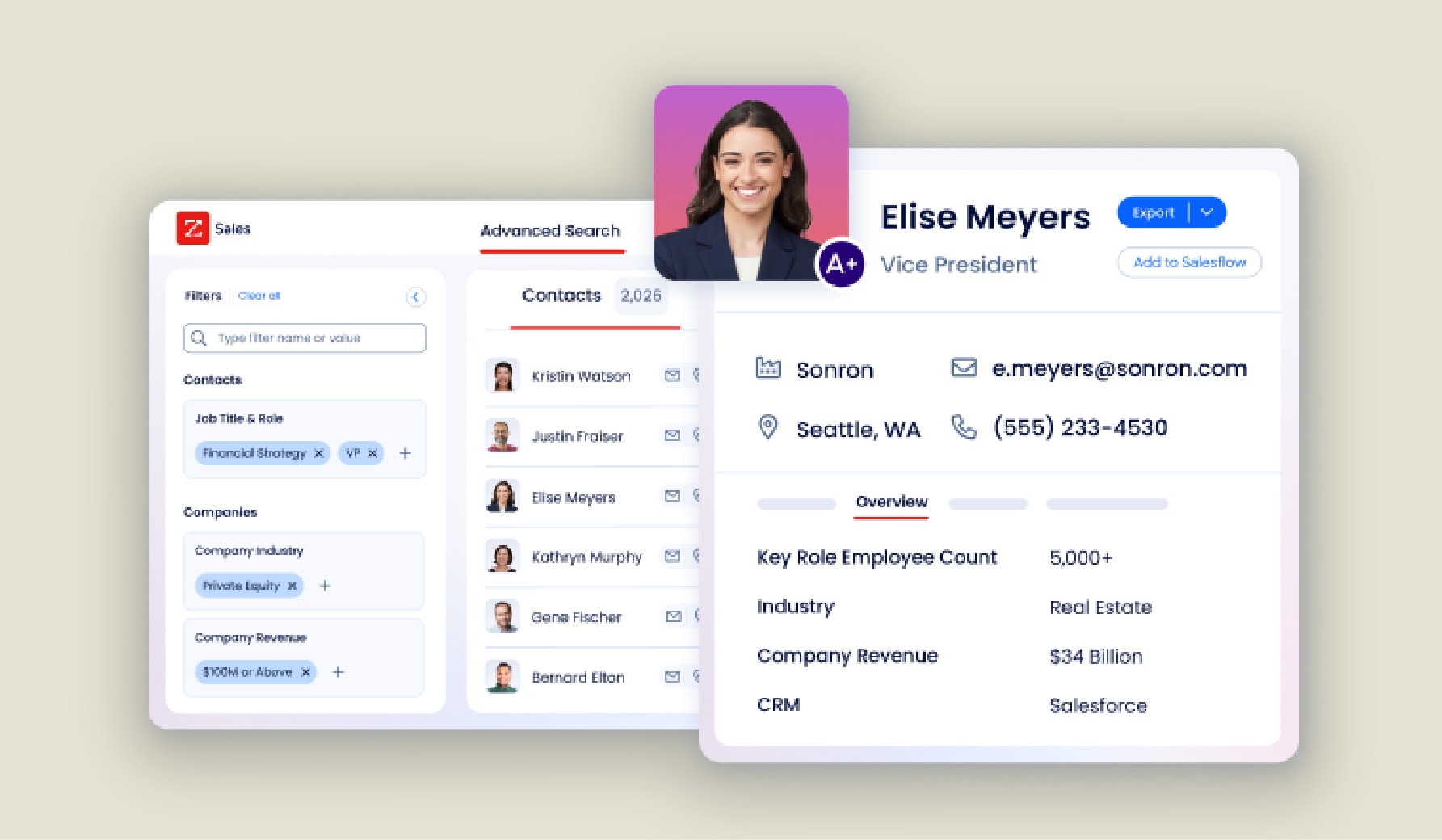
Both tools solve the "who exists" problem well. Neither solves the capacity problem behind it. Despite devoting nearly a full workday each week to prospecting, 48% of reps still say they lack the bandwidth to do adequate cold outreach, which means a bigger or cleaner list does not by itself produce more meetings booked.
Teams searching for AI tools for lead generation because outreach volume is too low should treat adding a data provider as a starting point, not the fix. The next category picks up where data providers stop: turning a list of accounts into a signal of who is actually ready to buy.
A large contact list still leaves a rep guessing at timing. Intent platforms narrow that guess by tracking which accounts are showing buying behavior before a rep ever reaches out.
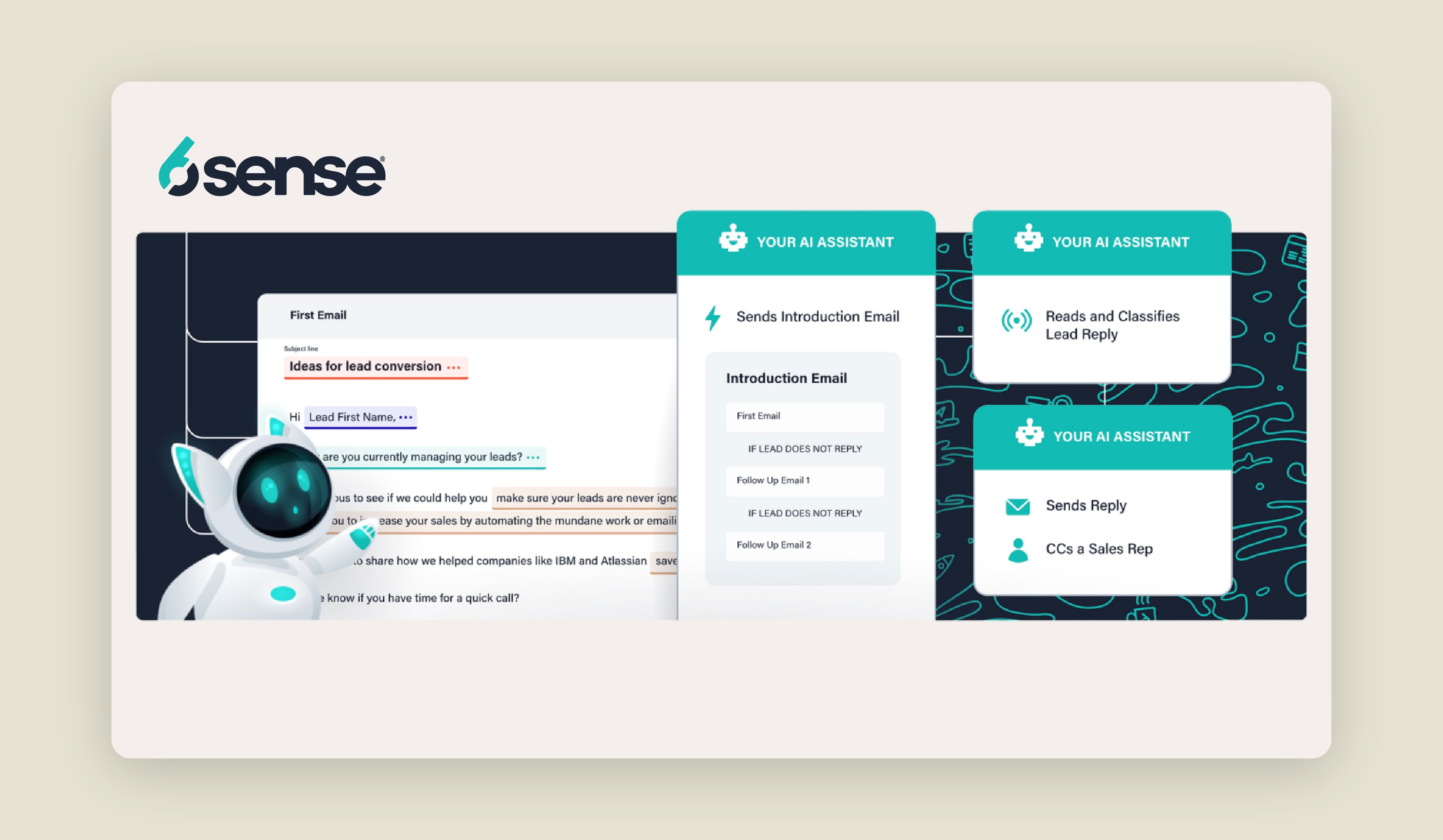
Intent signals used to separate teams that had them from teams that didn't. That edge narrows every time another sales team adds the same intent platform to its own stack, which means the platform alone stops being what separates a team that converts intent into meetings from one that doesn't.
Intent platforms answer which accounts are ready to prioritize. They do not identify the specific person to contact inside those accounts, or write and send anything once an account is flagged. That difference is where orchestration and execution tools come in.
Data providers and intent platforms each solve one piece of the problem. Orchestration tools exist to connect those pieces without a rep manually exporting and re-uploading spreadsheets between systems.
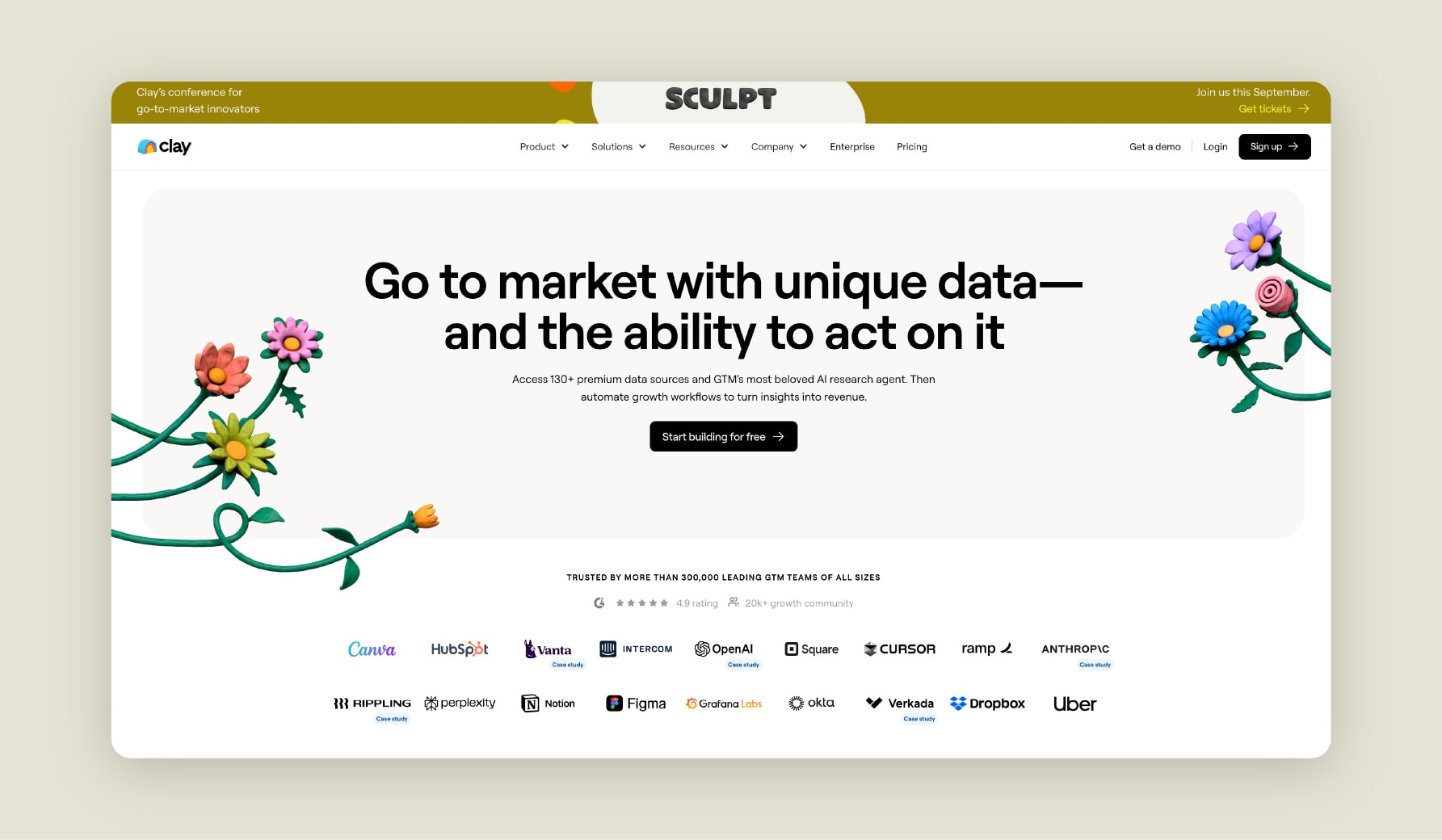
Clay is a workflow layer that pulls data from multiple providers into one enrichment pipeline, then applies custom logic to score and route leads based on rules a team defines. Clay lets a RevOps team write custom scoring and routing logic across multiple data sources, which a single-source tool can't do without manual export and re-import between systems, at the cost of ongoing setup and maintenance as that logic gets built and updated.
That maintenance cost is not hypothetical. Disconnected systems are already slowing down AI initiatives for 51% of sales leaders using AI, which means stacking an orchestration layer on top of an already fragmented stack can add friction before it adds pipeline. Orchestration works best when a team has the technical capacity to own it, not as a fix for a team that's already stretched thin.
Once a list exists and accounts are prioritized, someone still has to send the outreach and manage what happens to deliverability at scale. Execution tools handle that layer.
Execution tools are the most visible part of outbound because they're where messages actually leave the building, yet they carry no decision intelligence of their own. A rep still decides who goes into the sequence, what the message says, and when to follow up, before either tool sends anything on its own.
This is the layer where the manual work identified in the prospecting section gets absorbed or removed, depending on what sits upstream of it. A team using AI tools for lead generation at the execution layer alone is still doing the research and writing by hand. The tool only handles delivery.
Every category above solves a different part of the problem, which means the right starting point depends on which part is actually broken.
If the limitation is data, a team without enough verified contacts matching its ideal customer profile needs a data provider before anything else. No amount of orchestration or execution tooling fixes a list that's too small or too stale to work.
If the limitation is targeting, a team with enough contacts but no way to tell which accounts are ready needs an intent platform layered on top of existing data.
If the limitation is execution capacity, a team with good data and clear targeting, but not enough hours to research, write, and send outreach at the volume the pipeline number requires, needs a system that removes that manual work rather than one that speeds it up.
This decision is time-sensitive. 55% of sales professionals are already using AI for prospecting, with another 38% planning to, which means teams that delay this decision are competing against rivals already running faster cycles.
Choosing AI lead generation tools for B2B sales teams comes down to matching the category to the actual constraint, not the tool with the most features. A team that skips this diagnosis usually ends up adding another login to an already crowded stack without closing the disconnect that sent them searching in the first place.

Every category above still requires a person to run it. A rep reviews the enriched list, decides who to prioritize, writes the message, and tracks who replied. That manual layer is where most of the capacity problem actually lives, not in a lack of data or a missing feature.
Vector Agents' digital sales worker Lilian removes that manual layer instead of speeding it up. Lilian researches each prospect, writes outreach based on that research, sends it at the right time, and follows up on non-responses, without a rep touching each step. The work that used to sit between having a list and booking a meeting runs on its own.
This is what separates AI lead generation as a category of assisted tools from a system built to execute the job. Sellers expect AI agents, once fully implemented, to cut prospect research time by 34% and email drafting time by 36%, which is exactly the manual work Lilian removes rather than shortens.
A digital worker does not fix everything upstream of it. If contact data is stale or a CRM field is inconsistent, Lilian works from what it's given, the same as any tool covered above. Teams evaluating AI tools for lead generation should treat data quality as a separate decision from execution capacity, not something a single tool resolves by default.
Lilian is built for teams that have already added data and scoring tools and are still short on the one resource none of those tools produce: hours of actual outreach execution. Every category above still requires someone to run it. This one doesn't.
The list above isn't short on options. What most searches for AI tools for lead generation are actually missing is a way to match the tool to the constraint. A data provider won't fix an execution problem, and an orchestration layer won't fix a targeting problem. Naming which one is actually limiting pipeline is what makes this list useful instead of overwhelming.
For teams whose constraint is execution capacity, the fix isn't another tool a rep has to operate alongside the ones already in the stack. It's removing that manual layer entirely, so the hours spent researching and drafting turn into meetings instead. Book a demo with Vector Agents to see how Lilian runs prospect research, outreach, and follow-up without adding headcount to do it.
An AI lead generation tool typically handles one task, like enrichment or scoring, and still needs a rep to act on the output. An AI SDR, like Lilian, runs the full sequence, research, outreach, and follow-up, without a rep operating each step in between.
Most don't. Data, intent, and execution tools each assist a rep rather than replace one, so headcount stays the same even after they're added. Digital workers built for full execution can absorb the manual prospecting work itself, which changes headcount planning going forward rather than eliminating the sales function entirely.
Check where reps actually lose time first, rather than assuming which stage needs fixing. If contact lists are too small or outdated, the limitation is data. If lists are solid but outreach still isn't happening at the volume the pipeline number requires, the limitation is execution capacity, not information.
They can, but results will reflect the database's limits rather than the tool's sophistication. Every tool in this category, including full-execution systems, works from the data it's given and can't correct for gaps on its own. Fixing data quality is a separate decision from choosing which category of tool to add.
Apollo is usually the simpler starting point, since it combines contact data and sending in one product without extra setup. Clay suits teams that already have multiple data sources in place and need custom logic to route and score leads across them, which takes more time to configure correctly.

.svg)


.svg)
Vector AI All rights reserved. © 2025


.jpeg)